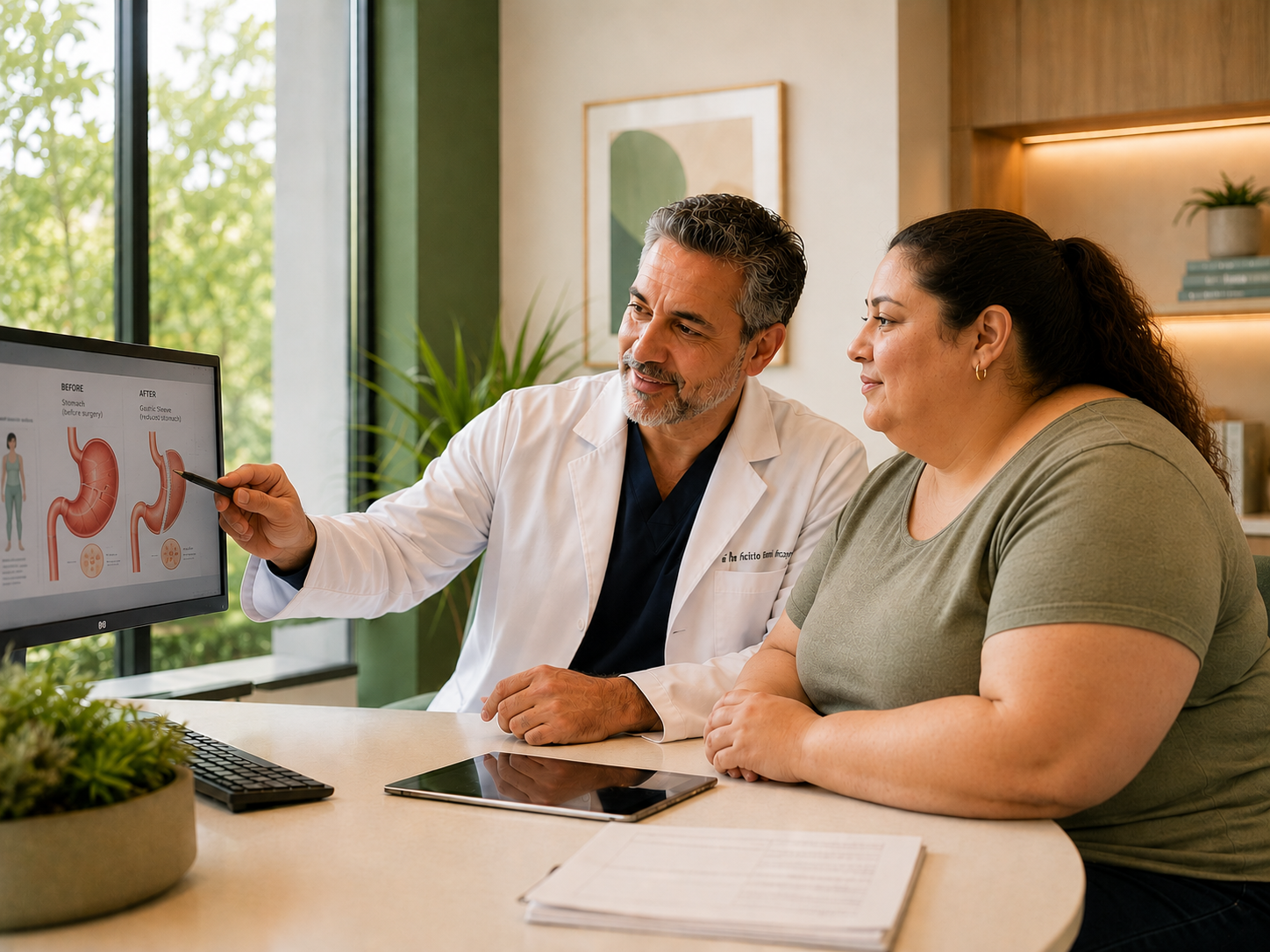
If you've tried dieting, exercise, and everything in between — and the results don't last — it's not about effort. For many patients, long-term weight loss requires a medical approach. Gastric sleeve and gastric bypass are helping people achieve results that other methods simply can't. And today, leading bariatric centers abroad make that care accessible, affordable, and fully supported.
Obesity is a complex medical condition — influenced by genetics, hormones, metabolism, and biology that no diet or exercise plan can fully override. If you've tried everything and the results don't last, that's not a personal failing. It's a signal that a different approach may be needed.
Bariatric surgery doesn't replace lifestyle changes — it creates the biological conditions that make lasting change possible. For eligible patients, it's one of the most effective medical interventions in existence for long-term weight loss and the health conditions that accompany it.
The body actively resists weight loss through hormonal adaptation. Bariatric surgery alters the physiology of hunger and satiety at a biological level — which is why results that were impossible through diet become sustainable after surgery.
Type 2 diabetes, hypertension, sleep apnea, and joint pain frequently improve — or go into remission — following bariatric surgery. For many patients, the health benefits beyond weight loss are the most life-changing part of the outcome.
In the US, bariatric surgery can cost $15,000–$30,000 — and insurance coverage is inconsistent. Leading bariatric centers abroad offer the same procedures with equally experienced teams, comprehensive programs, and major cost savings that make treatment genuinely accessible.
From surgical to non-surgical options — the right procedure depends on your specific health profile, history, and goals. Our partner specialists determine the appropriate approach after evaluating your full case.
The most widely performed bariatric procedure worldwide. Approximately 75–80% of the stomach is permanently removed, creating a narrow sleeve shape. This limits food intake and — critically — reduces levels of ghrelin, the hunger-stimulating hormone. Patients typically lose 60–70% of excess weight over 12–18 months. Laparoscopic (minimally invasive) approach, 1–2 hour procedure, 2–4 day hospital stay.
The stomach is divided into a small pouch and reconnected to the small intestine, bypassing most of the stomach and the first section of the intestine. Produces the strongest metabolic changes — particularly effective for patients with Type 2 diabetes. Considered the gold standard for severe obesity and related conditions.
A non-surgical, incision-free alternative to the gastric sleeve. The stomach is reshaped from the inside using an endoscope and sutures — no cuts, no hospital overnight stay in most cases. Best for patients with a BMI of 30–40 or those who prefer to avoid surgery entirely.
A silicone balloon is placed in the stomach endoscopically and filled with saline, reducing stomach capacity. Temporary (removed after 6 months) and fully reversible. Often used as a first step for patients not yet ready for surgery, or to achieve weight loss before a planned surgical procedure.
A simpler, single-loop version of the standard gastric bypass — shorter operating time and comparable weight loss results. Increasingly popular in Turkey and Mexico as an effective alternative with a slightly less complex surgical approach.
An innovative procedure developed in Brazil and now available at select partner clinics in Turkey — combining a sleeve gastrectomy with a partial bypass. Particularly strong metabolic results for patients with Type 2 diabetes. Eligibility is determined after full specialist evaluation.
Eligibility note: Bariatric surgery is generally indicated for patients with a BMI of 35 or above, or 30+ with obesity-related conditions such as Type 2 diabetes, hypertension, or sleep apnea. Final candidacy is always determined by the surgical team after reviewing your medical history. If you're unsure whether you qualify, submit your case — we'll give you an honest initial assessment.
Our bariatric network spans Istanbul, Mexico, and Costa Rica — each with experienced surgical teams, accredited facilities, and structured programs for international patients.
Most Comprehensive
Istanbul handles one of the highest volumes of bariatric procedures in the world. The combination of highly experienced surgical teams, JCI-accredited hospitals, and comprehensive international patient programs makes Turkey the most complete bariatric option in our network.
Mexico is the most accessible international bariatric destination for US patients — short flights, no jet lag, and experienced surgical teams in Tijuana and Playa del Carmen who have performed thousands of procedures for North American patients specifically.
Clinica Biblica Hospital in San José holds JCI accreditation and offers a comprehensive bariatric surgery program — laparoscopic gastric bypass, sleeve gastrectomy, and related procedures — in a world-class facility with strong international patient services.
This isn't a one-day trip. Bariatric surgery abroad is a structured medical program — from pre-operative evaluation through recovery and long-term follow-up. Here's what the journey looks like.
Your coordinator submits your case to the surgical team. They review your BMI, medical history, and any current conditions. You receive a proposed procedure recommendation, estimated costs, and a pre-operative checklist — including blood tests and any required clearances — before you book anything.
On arrival, you meet the surgical team in person and complete any remaining pre-operative assessments (blood work, imaging, anaesthesia review). The surgeon confirms the procedure plan, answers your questions, and schedules surgery — typically the following day.
Most laparoscopic bariatric procedures take 1–2 hours. You remain under monitored care for 2–4 nights post-surgery depending on the procedure and your recovery progress. The surgical team monitors you closely throughout your hospital stay.
After hospital discharge, you spend several days recovering at your accommodation. A post-op check confirms you are fit to fly. Most patients travel home 7–12 days after surgery. You receive a detailed discharge summary, dietary protocol, and follow-up schedule.
Your coordinator facilitates ongoing communication with the surgical team after you return home. Follow-up blood tests, nutritional guidance, and check-in appointments can be managed remotely or with your local doctor. The surgical team's support doesn't end when you leave the country.
From your first inquiry to your long-term follow-up — one coordinator manages everything so you can focus on the decision and the recovery.
Share your weight loss history, current health conditions, and what you're hoping to achieve. No commitment — just a starting conversation.
Based on your profile and goals, we identify the destination and surgical team best suited to your case — and explain our recommendation clearly.
The bariatric team reviews your case, confirms your procedure recommendation and eligibility, and provides a detailed estimate and program timeline.
We coordinate your full schedule — travel, pre-op, surgery, recovery, and post-return follow-up. Your coordinator stays reachable throughout the entire journey.
Answered honestly — the same way we'd answer them in a direct conversation.
Safety depends on the hospital and surgical team — not the country. The hospitals in our network are JCI-accredited or equivalent, with dedicated bariatric units and surgical teams who perform high volumes of these procedures regularly. High volume is especially significant in bariatric surgery — outcomes improve substantially with experienced teams. We don't coordinate care with unaccredited facilities or surgeons without a documented bariatric track record.
General eligibility criteria: BMI of 35 or above, or BMI 30–35 with at least one serious obesity-related condition (Type 2 diabetes, hypertension, sleep apnea, severe joint disease). You should have a documented history of attempting non-surgical weight management. Final candidacy is always determined by the surgical team after reviewing your full medical history. If you're unsure, submit your case — the team will tell you honestly whether you qualify before any commitment is made.
In the US, gastric sleeve surgery typically costs $15,000–$25,000, and gastric bypass can run $25,000–$35,000 — often with inconsistent insurance coverage. At our partner centers in Turkey, Mexico, and Costa Rica, comparable procedures with experienced surgical teams typically cost 60–75% less. All figures are estimates until confirmed by the surgical team after your case review. Flights and accommodation are not included unless specifically stated in your package.
Plan for 10–14 days total. This covers pre-operative assessments on arrival, the surgery, 2–4 nights in hospital post-surgery, and several days of local recovery before you're cleared to fly. The specific timeline depends on your procedure and your individual recovery progress. We never rush the departure clearance — you fly home when the surgical team confirms it's safe to do so.
You receive a comprehensive discharge package including your surgical summary, dietary protocol, supplement schedule, and follow-up appointment timeline. Blood tests and nutritional monitoring at 3, 6, and 12 months can typically be done with your local doctor using the guidance provided. Your coordinator facilitates ongoing communication with the surgical team for any questions or concerns — and we're available if additional coordination is needed.
Bariatric surgery produces the best long-term outcomes of any available weight loss intervention — but the results depend significantly on commitment to the post-operative lifestyle and dietary changes required. Surgery is a tool; sustained results require engagement with the nutritional and behavioral guidance provided as part of your program. We present these expectations honestly before you commit, so you know what success actually requires.
Package inclusions vary by destination and clinic. In Turkey especially, many packages include the procedure, hospital stay, pre-operative tests, accommodation, and airport transfers. Flights are not included in any package unless explicitly stated. What is and isn't covered will be specified clearly in your estimate — we won't let you discover unexpected costs after you arrive.
Reach out today and we'll help you plan your treatment abroad, step by step. A coordinator will follow up within 24 hours — to understand your situation and give you an honest picture of what's available for your specific case.